AI in Facilities Management: What Works Today
AI in facilities management works today where it reads something you can check and proposes something a person approves: answering questions from leases and documents with the page cited, turning photos of checks, labels and forms into rows, drafting checklists and requests that someone confirms before they are saved. It is not ready to make judgment calls on its own, and anything it says without a source to check against should be treated as a draft.
That is an operator's view. Below is what the industry surveys say, the failure mode to design around, and four uses that hold up in a real building, each shown on a live screen.
How many teams actually use AI?
Fewer than the headlines suggest, and more than a year ago.
- RICS, August 2026. In its survey of commercial property professionals (1,265 responses to its commercial property monitor), 39% were piloting AI, 29% reported regular use, and 6% reported widespread or full use.
- JLL, October 2026. Its Global State of Facilities Management Report, drawing on 1,321 organizations in 15 countries, says "45% of occupiers are already scaling or optimizing AI within their FM operations."
The two are measuring different populations with different questions, so do not average them. Read together, they say most organizations are past curiosity and short of depending on it.
The failure mode to design around
Generative AI can be wrong in a confident voice. The US National Institute of Standards and Technology has a name for it in its Generative AI Profile (July 2024): "'Confabulation' refers to a phenomenon in which GAI systems generate and confidently present erroneous or false content in response to prompts."
And the organization owns the answer. In Moffatt v. Air Canada (2024 BCCRT 149), British Columbia's Civil Resolution Tribunal held Air Canada responsible for wrong information its website chatbot gave a customer about bereavement fares, and rejected the airline's argument that the chatbot was responsible for its own actions.
So the design question is never "is the AI accurate?" It is "how quickly can a person check it, and does anything happen before they do?" Every use below passes that test.
Four uses that hold up today
Answering questions from documents, with the page
Leases, contracts and manuals hold answers nobody remembers. AI that reads them is genuinely useful, as long as every answer cites where it came from and opens the document at that spot.
The demo, with sample data, asks "Who pays for HVAC repairs?" across 14 leases in MAFM. The answer cites its sources, and one click opens the lease at section 9.3 on page 14, where a person can read the clause. More on this in our guide to what to abstract from every lease.
Turning photos into rows
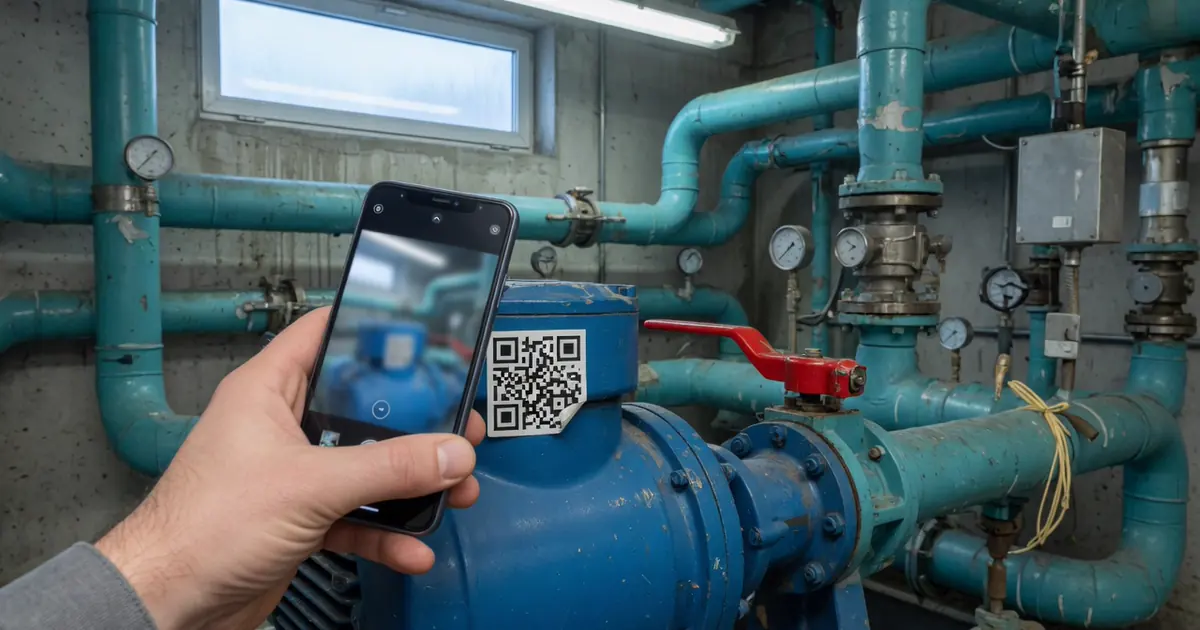
A stack of rent checks, a pile of shipping labels, a paper sign-in sheet: typing them in is pure transcription. Reading them from a photo is a task AI does well, and the check is easy because the photo sits right next to the row.
In the demo, with sample data, each check is read into a row with its date, check number, sender, amount and invoice number while the camera stays open. We have not found an independent public benchmark for how accurately AI reads photographed checks or labels, so the rows are shown for a person to confirm before they are copied anywhere.
Proposing changes that a person applies
Building a cleaning checklist for three floors is tedious. Asking for it in a sentence is not. The safe pattern is the one where the AI drafts the change and shows it, and nothing is saved until someone applies it.
Here the assistant is asked to add a restroom group for floors 3 to 5. It previews six proposed changes, and only when someone clicks Apply do the group and its five tasks appear.
Filing requests from a conversation
A tenant or a technician describes a problem in plain words, and the assistant files the service request with the location and details filled in, once the person says yes. It saves the form-filling without taking the decision away. From there, the request is measured like any other; see how to measure work order response time.
What AI should not do on its own
- Judgment calls. Whether a lease option is reasonably certain to be exercised, which vendor to trust, who covers a shift: the AI can gather the facts, a person decides.
- Changes without a preview. Bulk edits to schedules, checklists or records should always be shown first.
- Answers without sources. If it cannot say where the answer came from, treat it as a guess.
NIST's AI Risk Management Framework puts the organizational version of this in one line, in GOVERN 3.2: "Policies and procedures are in place to define and differentiate roles and responsibilities for human-AI configurations and oversight of AI systems." In plain words: decide in advance what the AI may do alone, what needs a person, and who that person is.
How MAFM uses AI
Every AI feature in MAFM follows the same rule: it reads or drafts, and a person confirms. Lease answers cite the page. Photographed checks become rows you review. The checklist assistant lists every change before anything is saved, and the chat assistant files a request only after you say yes. See the AI chatbot feature for the details.
Frequently asked questions
How is AI used in facilities management?
The uses that work today read documents and photos and draft records for a person to confirm: answering questions from leases with the page cited, turning photos of checks and labels into rows, drafting checklists, and filing service requests from a conversation after the person agrees.
Can AI replace facilities managers?
No. AI removes transcription and form-filling, but facilities work is full of judgment calls about vendors, people, safety and money. Responsibility for an answer stays with the organization, as Moffatt v. Air Canada showed when a company was held to its chatbot's answer.
What are the risks of AI in facilities management?
The main one is confabulation: confident answers that are wrong. Reduce it by requiring sources for every answer, showing changes before they are saved, and deciding in advance which actions need a person to approve them.
How many facilities teams use AI?
In RICS's 2026 survey of commercial property professionals, 29% reported regular use of AI and 39% were piloting it. JLL's 2026 facilities management report says 45% of occupiers are scaling or optimizing AI in their FM operations.
To see AI that shows its work in a real operation, talk to an operator who uses it every day.