Preventive Maintenance Schedule: Calendar or Completion?
A preventive maintenance schedule sets the next due date in one of two ways. A calendar schedule keeps a fixed date (every January 10, every quarter on the 10th) no matter when the last job was actually done. A completion schedule counts the next interval from the day the work was finished. Use the calendar for code-required tests and contract visits, where an authority or a contract owns the date. Use completion for wear items like filters and belts, where what matters is the time since the last service.
The choice only shows up when a job runs late, which is exactly when it matters most.
What happens when a job runs late
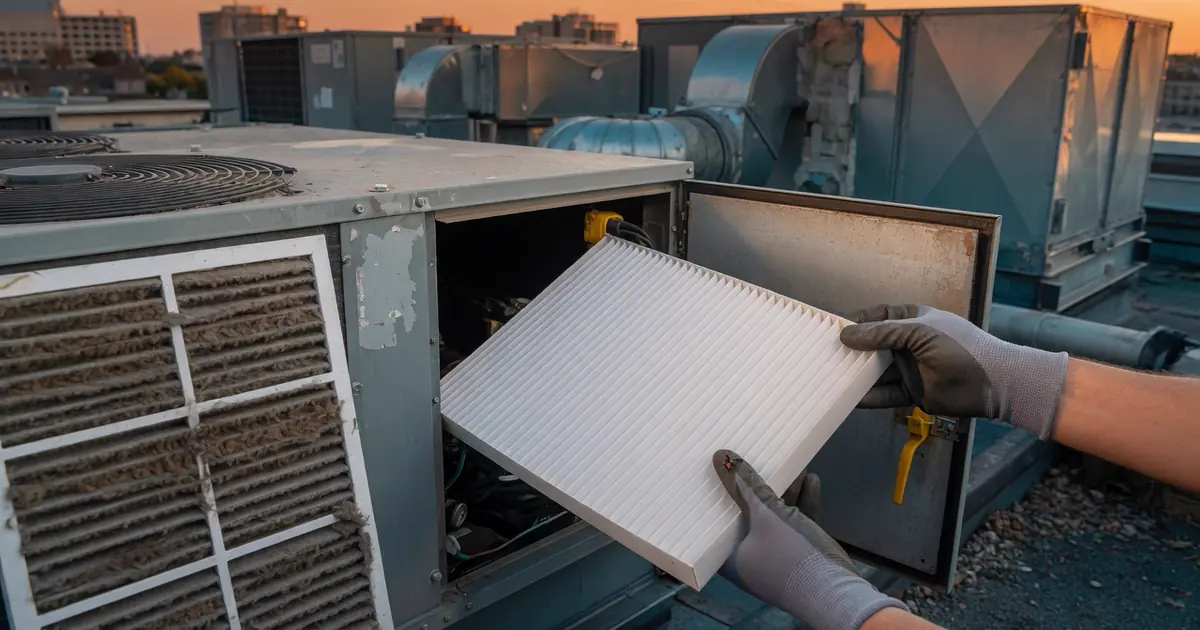
Take an air filter on a 90 day interval, due January 10. The technician gets to it on January 31, three weeks late.
| Calendar (fixed) | Completion (floating) | |
|---|---|---|
| Last due | January 10 | January 10 |
| Actually done | January 31 | January 31 |
| Next due | April 10 | May 1 |
| Days between services | 69 | 90 |
On a calendar schedule, the late job squeezes the next interval to 69 days, and the schedule stays put. On a completion schedule, the interval stays 90 days, and every future date slides three weeks later.
Neither is wrong. They answer different questions. The calendar protects the date. Completion protects the interval.
When the calendar has to win
For inspections and tests that a code or a regulator requires, the date often is not yours to move.
The Seattle Fire Department's administrative rule on fire protection system testing sets an anniversary one year from a new system's acceptance test and says plainly: "The anniversary date shall remain fixed and establish the due date each year for subsequent tests." Late or not, next year's test is due on the same date.
Other rules set a minimum frequency without saying how to handle a late test. California's cross-connection control handbook, amended in April 2026, says backflow prevention assemblies "must be field tested at least annually." It does not say whether a late test resets the anniversary. When the rule is silent, ask the authority that enforces it and keep the answer on file.
The same goes for sprinklers, fire alarms, emergency generators and elevators. NFPA 25, NFPA 72, NFPA 110 and ASME A17.1 set inspection and test frequencies, but your jurisdiction adopts a specific edition, and the intervals change between editions. Phoenix, for example, adopted ASME A17.1-2022 for elevators effective August 1, 2025. We are deliberately not quoting intervals from those codes here: read the table in the edition your fire marshal or elevator inspector enforces, and anchor those tasks to the calendar.
When completion should win
For anything that wears with use, the interval is the point. A filter, a belt or a lubrication point does not know what the calendar says; it knows how long it has run since someone last touched it. Count from completion and a late job does not shorten the life you get out of the next one.
| Task | Anchor the next date to | Why |
|---|---|---|
| Fire sprinkler, alarm and backflow tests | Calendar, as the authority requires | Some authorities fix the anniversary in writing |
| Elevator inspections | Calendar | Set by the inspector and the adopted code edition |
| Vendor contract visits | Calendar | The contract names the dates |
| Seasonal work, like cooling tower start-up or roof drains before the rains | Calendar | The season does not move when you are late |
| Air filters, belts, lubrication | Completion | The interval since the last service is what matters |
| Inspections you set yourself, like monthly walk-throughs | Either, but pick one and write it down | Consistency matters more than the choice |
If an HVAC task list needs a reference, the inspection and maintenance standard for commercial HVAC systems is ANSI/ASHRAE/ACCA Standard 180-2018, approved in June 2018.
The schedule only matters if the work gets done
Public audits suggest the hard part is not the anchor. It is doing the work at all, and proving it.
- A 2026 Salt Lake County audit of a contract that required preventive maintenance on a public building found that of 116 PMs required in 2023 and 2024, 42 (36%) were completed as required.
- A September 2026 GAO report on school facilities estimated that 19% of US school districts had limited capacity to perform preventive maintenance (95% confidence interval: 15% to 23%).
Two numbers to track, then, alongside the schedule itself:
- PM completion rate: PMs completed on time divided by PMs due, by month.
- PM backlog: PMs past due today, with how far past due each one is.
A completion rate of 36% does not need a better scheduling method. It needs fewer tasks, more hands, or a contract that gets enforced.
How to set up a schedule that holds
- List every asset that needs recurring work, with its location, so the task can be found by the person sent to do it.
- Mark each task calendar or completion, using the table above. Write down who owns any calendar date: a code, a contract or you.
- Set the interval from the right source: the adopted code edition for life safety systems, the manufacturer's manual for equipment, your own history for everything else.
- Record the date the work was actually done, not the date it was due or the date someone typed it in. That date is what a completion schedule runs on and what an inspector asks to see.
- Review the completion rate and backlog monthly. If tasks keep slipping, cut or combine them before you add more.
How MAFM schedules the next job
In MAFM, each asset carries its maintenance schedule. When a technician records the work, the next due date is set from the day the work was actually done, at the schedule's frequency: completion based by default. If the technician's notes mention a problem, like a part that failed or a repair that is needed, the team gets notified. The record keeps who did the work and when, so the history is there when an inspector or an owner asks.
See the asset and inventory solution for how assets and their schedules fit together, or our post on measuring work order response time for the reactive side of the same queue.
Frequently asked questions
What is the difference between fixed and floating PM schedules?
A fixed (calendar) schedule keeps each due date on the calendar regardless of when the last job was done. A floating (completion) schedule counts the next interval from the day the work was finished, so a late job moves every future date.
How often should preventive maintenance be done?
It depends on the asset. Life safety systems follow the code edition your jurisdiction adopted, equipment follows its manufacturer's manual, and everything else should follow your own failure history. Review intervals once a year.
What happens if a preventive maintenance task is late?
On a calendar schedule, the next due date stays put, so the next interval is shorter. On a completion schedule, the next date moves later by the same amount. For code-required tests, check whether your authority fixes the anniversary.
What is PM compliance?
PM compliance, or PM completion rate, is the share of preventive maintenance tasks due in a period that were completed on time. It is the single best check on whether a maintenance program is real or only on paper.
If your preventive maintenance still lives in a spreadsheet and a wall calendar, talk to an operator who runs their own buildings on MAFM.