How to Do a Physical Asset Inventory for Facilities
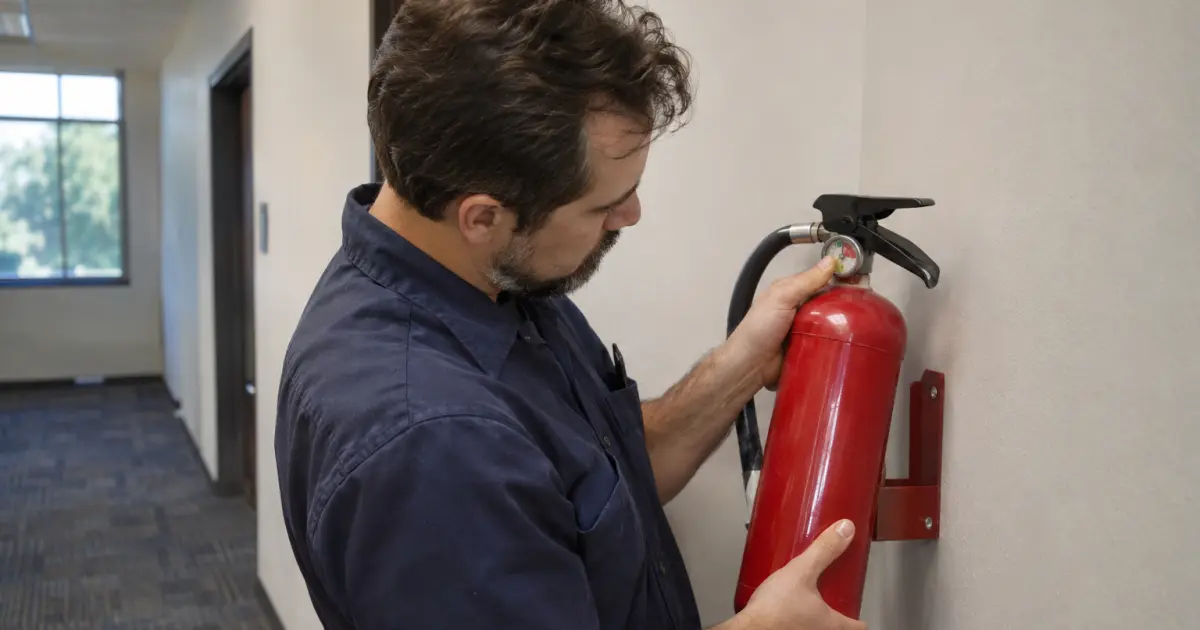
A physical asset inventory is a walk through every building to confirm that each item on your asset register exists, sits where the record says, carries its tag, and matches its description, and that nothing in the building is missing from the register. Do it by location, scan or read every tag, chase the differences in both directions, and only then update the records. Count at least every two years, more often where things walk away.
Two numbers show why it matters. When auditors checked a New York school district's register against its buildings in a 2025 audit, 37 of the 60 assets they picked (62%) had an exception. Jefferson County Public Schools in Kentucky found in its own internal audit in September 2026 that 65 of 198 assets (33%) chosen from its records could not be located at the time of the site visit. Neither place had stopped keeping records. The records had drifted away from the buildings between counts.
What a physical inventory checks
A physical inventory tests the register in two directions. Most teams only do the first one.
| Direction | Start from | Question | What it catches |
|---|---|---|---|
| Record to floor | A line on the register | Is it here, tagged, and as described? | Losses, theft, unrecorded moves, wrong serial or model numbers |
| Floor to record | An item in the room | Is it on the register? | Purchases never recorded, donations, items put into service before tagging |
The New York State Comptroller's guide to capital assets puts the point plainly: "A physical inventory is the only way to establish initial accountability." It also says the count is needed "periodically thereafter to ensure the system's continued accuracy."
How often do you need to count?
There is no single rule for private buildings, so the answer comes from whoever funds or audits the assets.
- Equipment bought with federal grant money: at least every two years. The federal grant rules at 2 CFR 200.313(d)(2) say "A physical inventory of the property must be conducted, and the results must be reconciled with the property records at least once every two years."
- Local governments in New York: the Comptroller's guide suggests departments count their own assets periodically, with a central check of some departments every year so that every department is covered "over a three- or four-year period."
- Everyone else: set the cycle by risk. Laptops, radios, tools and anything on wheels get counted more often than air handlers bolted to a roof.
Add one trigger the calendar misses: count whenever the person responsible for a site changes. The Kentucky audit found that physical inventories were not done when a principal or department head took over, "so incoming leaders receive no documented baseline of the assets for which they are accountable." Its recommendation was a count within four weeks of the change, signed by both the outgoing and incoming leader. For a facilities team, that means a new site supervisor, a new building engineer, or a new client contract.
Decide what goes on the register first
You cannot count what you never defined. Before the walk, write down the threshold for what gets tracked.
The New York guide separates two thresholds that often get blurred: the capitalization threshold, which decides what appears in the financial statements, and a lower tracking threshold, which decides what you keep control of. Its example is a $10,000 capitalization threshold for equipment and a $500 threshold for assets tracked internally. It also says to group similar items: 100 steel chairs at $25 each are judged as $2,500, not $25.
Federal grant rules work the same way in reverse. 2 CFR 200.1 defines equipment as tangible property with a useful life of more than one year and a per-unit cost at or above the lesser of your own capitalization level or $10,000.
For facilities work, the tracking threshold is the one that matters. Floor scrubbers, pressure washers, ladders, radios and tablets often fall under a finance threshold and are exactly what goes missing.
What each asset record needs
The same short list shows up in the federal rule and in the state guidance. 2 CFR 200.313(d)(1) asks for:
- A description and a serial number or other identification number
- The acquisition date and cost
- The location, use and condition
- Disposition data, including the date of disposal and sale price
Add the person or role responsible for the location, and the asset's tag number. One field deserves special attention: location must be a real place. The 2025 New York audit of Valley Stream Central High School District found 60 assets worth $142,129 with a room location of "throughout", including a $16,723 lawn mower that was actually kept in a storage container in the district yard. "Throughout" cannot be counted.
How to run the count in six steps
- Freeze a snapshot. Export the register for the site, by building, floor and room, on the day the count starts. Moves during the count are logged, not silently fixed.
- Walk by location, not by list. Go room by room and record what is there. Walking from the list only proves that listed items exist; walking the rooms also finds what the list is missing.
- Read the tag, then the serial number. The tag ties the item to its record, and the serial number proves it is the same item. The New York guide also says to set rules for exactly where tags are fixed on each type of equipment, so nobody spends ten minutes looking for one.
- Mark every exception as it happens. Missing, found but untagged, found in the wrong room, found but not on the register, described wrongly. Use those five buckets every time so results compare from one count to the next.
- Chase the missing items before you write anything off. Ask the site, check transfer and disposal records, and set a deadline for a written answer. The Kentucky district's own guidelines gave site leaders two weeks to explain missing items, and the audit found the answers often never came.
- Reconcile and sign. Update the register only for items that are confirmed, and have the person responsible for the site sign the results. 2 CFR 200.313(d)(3) also requires that "Any loss, damage, or theft of equipment must be investigated."
Where registers drift between counts
The count finds the problem. It rarely causes it. The two audits show that the register goes wrong at the moments an asset changes hands.
At receiving. In New York, 382 assets worth $178,123 bought over 19 months were never entered into the inventory system. The assistant superintendent said the only person with access to the inventory system had left, and the facilities director told auditors "assets are sometimes put into operation before they are tagged." In the Kentucky audit, 4 of 24 purchase orders tested were recorded between one and seven months after the order closed.
At transfers. In Kentucky, 7 of 93 assets observed on site (8%) were at a different site than the record said, and 4 of 25 central office assets (16%) had been sent to a school without the record changing. In New York, a refrigerator recorded at the junior high was standing in the high school.
At disposal. In Kentucky, 10 of 25 disposals tested (40%) were retired from the register on a verbal confirmation that the item was gone, with no transfer or surplus form. One retired item was still sitting in the surplus warehouse. In New York, a plow marked as disposed of was still attached to a district vehicle.
At the tag itself. In New York, auditors could not confirm 19 of the assets they picked, worth $52,992, because the items custodians showed them had no tag, and the record held nothing but a brand and model number to match them on. Another 18 items worth $46,305 could not be found at all, including four freezers and two handheld radios.
The lesson for a facilities team is that a better count is only half the fix. The other half is capturing the change at the moment it happens: tag at receiving, scan on every move, and require a record before anything leaves the building.
When nobody has time to count
Both audits trace part of the problem to capacity. In the Kentucky district, three property records technicians covered roughly 70 locations each. Of six high schools tested, none had a complete physical inventory inside the two-year cycle, and seven of ten elementary schools tested had not been inventoried in that cycle.
The audit's recommendation is useful for any multi-site operation: either rank sites by risk and count the risky ones more often, or have each site count its own assets every year with a short template while the central team spot-checks a sample. The second option is how a facility services company can cover dozens of client buildings without a dedicated property team.
If you also manage consumables across closets, our guide to janitorial supply inventory covers counting stock rather than equipment. For how asset records sit inside maintenance software, see CMMS vs IWMS, and for keeping those assets serviced between counts, our post on preventive maintenance scheduling.
How MAFM handles it
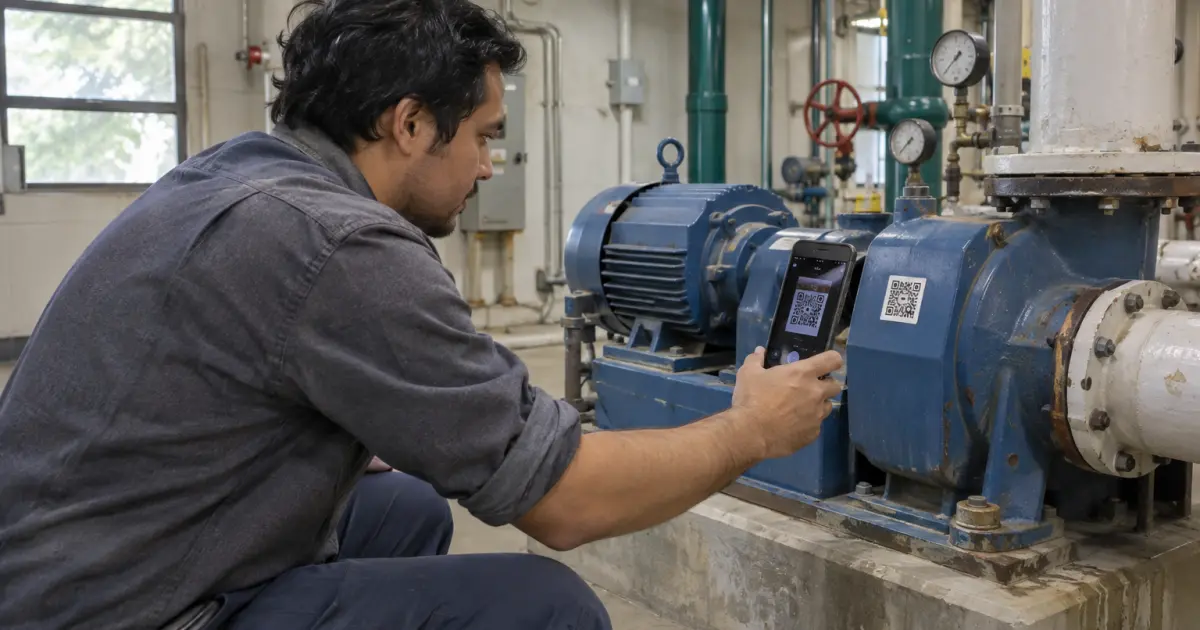
In MAFM, every asset gets one record from purchase to disposal, with its QR code, location by building, floor and area, maintenance schedule, inspections, warranty and depreciation, and a parent when it is part of something bigger. Our founders' facilities company tags its own equipment, from floor scrubbers to ladders, with QR codes from this module, and a crew member scans the tag to log an inspection or report a fault on the spot. See how it works on the asset and inventory page.
Frequently asked questions
How often should a physical inventory of fixed assets be done?
For equipment bought with federal grant money, at least once every two years under 2 CFR 200.313. Otherwise set the cycle by risk: count portable, easily stolen items more often, and count a site whenever the person responsible for it changes.
What is the difference between a physical inventory and an asset register?
The asset register is the record of what you own, where it is and what it cost. A physical inventory is the walk-through that checks the register against what is actually in the buildings, then corrects the register where they disagree.
What should you do when an asset cannot be found?
Do not write it off on the spot. Check transfer and disposal records, ask the site for a written answer by a set deadline, and investigate the loss. Retire the record only once the outcome is documented, and keep that documentation with the asset's history.
Do assets below the capitalization threshold need to be counted?
Often, yes. The capitalization threshold decides what goes in the financial statements, not what you need to control. New York's guidance gives an example of tracking assets internally from $500 while capitalizing equipment only from $10,000.
If your asset list lives in a spreadsheet that nobody trusts after the last move, talk to an operator who tags and tracks their own equipment on MAFM.